
Schools & Departments
Academic Opportunities
Menu
Menu
The Master of Science in Counseling program at Cairn University focuses on psychological and spiritual health through the restoration of a person’s relationships with God. It will prepare you with a worldview rooted in Christ and provides the necessary preparation for professional licensure, offering both in-person and online modality options.

The MS in Counseling program at Cairn University offers two convenient learning modalities designed to fit different student needs and preferences. Both the in-person and online programs maintain the same Christ-centered curriculum and aim to equip students for professional counseling licensure while fostering their personal and spiritual growth. Students receive close instruction and mentoring on your counseling skills through laboratory training.
Cairn University Ranks #2 in Glanzer’s Guide to Christian Colleges and Universities. At Cairn University, we work hard to ensure that everything we do inside and outside the classroom aligns with our commitment to Christian education, clearly articulated in our University mission statement.
Upon completion of the program MS in Counseling program requirements, students from most states become eligible for state licensure. *Click here for details.
Students pursuing the MS in Counseling degree gain clinical competence grounded in biblical principles. At Cairn, we are rooted in the Scriptures; it is the foundation of everything we do whether it is in the classroom, on the field, or out in our local community.
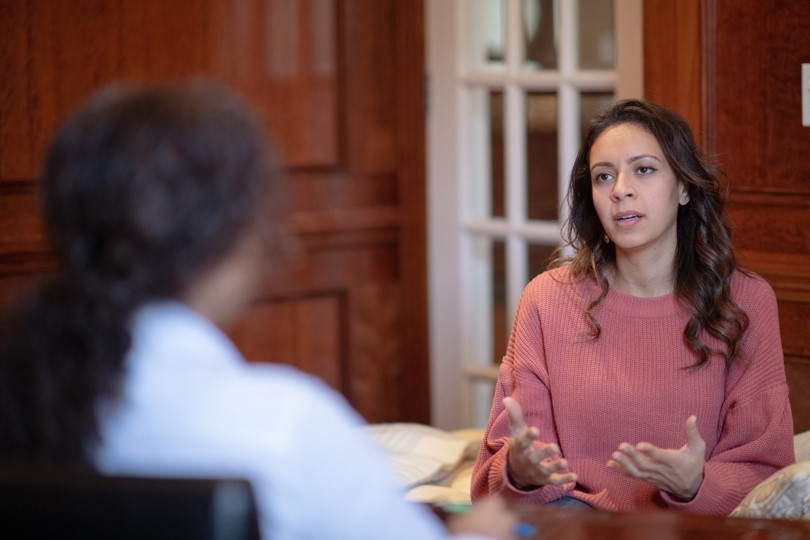
The program includes multiple lab courses enabling students to develop and practice counseling skills through live simulations in a supervised lab setting.
Students experience close faculty mentorship through small class sizes. The program is designed so that students grow socially, emotionally, spiritually, and intellectually through integrated learning.
Cairn University’s Master of Science in Counseling program is deeply rooted in a Christ-centered curriculum that integrates psychological principles with a biblical worldview. This 60 credit program blends 54 credits of core counseling courses with 6 credits of Bible and theology studies. The core curriculum includes courses such as Counseling Theory, Psychopathology, Marriage and Family Counseling, and Professional Internships, equipping students with practical skills and theoretical knowledge for professional licensure. Specialized labs and courses like Trauma and Grief Counseling and Career Development enhance hands-on learning. Integrated with Theological Foundations of Counseling and Overview of Christian Theology, the program grounds students in a Christ-centered approach to holistic mental health practice.
Learn more:
The following are the core curriculum courses for this program:
Understanding people and their problems and helping them find solutions and change is no easy task.
Students in the MSC program are equipped for this task by seasoned and experienced faculty who base every aspect of the students’ training on the following core values:
The centrality of Christ in psychological health
Christ is the ultimate source of life and health. People cannot truly experience wholeness – psychologically or spiritually – without knowing Christ intimately and obeying Him unconditionally. As our Creator and Lord, He alone can give us the power and freedom to change, live and love as healthy people.
The authority of the Bible for understanding people
The Bible, God’s written Word, is a sufficient source for understanding people and their nature. In providing counseling and psychological care or discipleship to those who are suffering, it is vital to have guiding principles regarding the complexity of human nature, how problems are maintained, and what promotes change. Our program teaches a biblical anthropology for understanding and engaging with people in their suffering and supporting their healing, growth, maturity, and hope as they navigate the struggles of life.
The need for clinical and academic excellence
Our Christian worldview takes seriously the call in Matthew 22:37 to honor God with our mind and intellect. Our program emphasizes the importance of honoring God through study and research. Preparation to address the heavy emotional and psychological problems of others requires thorough training, including a robust knowledge of the clinical aspects of counseling and mental health, as well as intellectual acumen regarding the wisdom of Scripture in guiding case conceptualization, identifying markers of psychological health, and supporting growth and well-being.
The significance of character development in effective counseling and discipleship
Our graduate counseling programs emphasize preparation not only in intellectual and clinical skill development, but also in the personal formation of each student. Throughout the program and especially in laboratory experiences, character growth is a central focus of training. We seek to foster emotional, relational and spiritual development in every student to prepare them for the profound responsibility of counseling others through life’s most difficult challenges.
The mission statement of the graduate counseling programs is to equip women and men to be biblically-minded, professionally competent persons of character as professional counselors. These three goals are summarized as the pursuit of knowledge, skills and mature character. Each individual course in the counseling curriculum is designed to develop one or more of these qualities in Cairn’s counseling graduate students.
Counselors must acquire a broad understanding of persons and the context in which they live. This goal is achieved by first considering knowledge about persons and their problems from a distinctively Christian worldview. Second, while these categories are summarized in general terms of knowledge, skills, and maturity; the content of counseling courses mirrors the eight common core curriculum areas identified by CACREP as the essential foundation of counselor education.
Cairn’s goal as counselor educators is to assist students in achieving the following knowledge goals:
Knowledge of Christian Psychology
Christian psychology as a principal knowledge goal refers to a theoretical orientation for examining models of counseling. Beginning with the assumption that knowledge or the means of knowing things consists of competing and incommensurable worldviews or epistemologies, Christian psychology evaluates all knowledge, but particularly knowledge about persons and their problems from a biblical-theological perspective. Students in the program acquire an understanding of Christian worldview thinking, and an ability to think critically about the role of presuppositions in developing counseling models and conducting empirical research.
Cairn also views Christian psychology as a separate type of counseling model. The goal of a Christian counseling model is to create a robust view of human functioning that is framed by a distinctively biblical starting point. Beginning with the idea that knowledge is something that humans create, not simply find; the goal of a Christian counseling model is the creation of a coherent view of human functioning that is grounded in the belief that God has much to say about what people are like, why they behave in certain ways; how their inner and outer world can go awry and how change within and without takes place.
In other words, Cairn’s goal is not only to teach students how to critically sift through and apply many of the theoretical constructs, methods and findings of counseling and psychology, but to create theoretical models of human behavior grounded in a robust view of persons from biblical-theological vantage point.
Other knowledge goals correspond with the knowledge goals articulated in the CACREP standards. Some of these goals are met mainly in courses associated with specific topics. Other goals are met in numerous courses throughout the curriculum, over the course of the three years it takes to complete the program.
Effective performance as a professional counselor requires acquiring a certain degree of mastery or competence of a wide array of methodologies counselors use in professional practice. The second major objective of the program is to equip counselors-in-training with these essential skills. Cairn focuses on the development of the following skills:
Skills are developed in a variety of ways in a variety of venues or contexts. The counseling program is committed to a hands-on, practiced based competency model of training. Much of this training occurs in year-long small group cohorts that we refer to as training labs. Students participate in weekly three-hour training labs for the first two years of the program. Students must demonstrate mastery of the skills associated with the corresponding lecture before they can proceed to the next lecture-lab training module. This small group instructional environment is designed to provide students with a safe context in which to develop their skills – first counseling their peers, then role players, and finally persons in the community who are committed to assisting students in skill development.
The presence of certain professional and personal dispositions or the role of professional character and personal maturity are essential for successful professional practice. In fact, Cairn views the development of these attributes as so necessary that students who do not demonstrate satisfactory progress in professional character are required to repeat their last lab until they demonstrate sufficient development in all areas of personal and professional maturity evaluated by the MSC faculty.
Training and mentoring in professional disposition are incorporated into the counseling curriculum as a whole and is a primary focus of each lab training experience.
Professional and personal maturity are measured at the end of each lab, reviewed by MSC faculty in an ongoing fashion during the semester, and at a formal review at the end of each semester. Students who fall short in the assessment rubric meet with the MSC faculty and collaborate in the development of a remediation plan that guides their continued participation in the counseling program.
Students are evaluated for:
Ethical Conduct and Decision Making
Professional Conduct
Multicultural Awareness and Sensitivity
Emotional Stability and Self-control
Commitment to Professional and Personal Growth
Flexibility and Adaptability
Emotional Intelligence
Boundaries and Self-care
Interpersonal Self-awareness
Relational Maturity
Capacity for Effective Collaborative
Spiritual Maturity
Cairn University’s MSC program is a 60-credit master’s program, which consists of coursework that equips students to begin the process of obtaining licensure in the Commonwealth of Pennsylvania, the State of New Jersey, Delaware and other states. Please refer to the Licensure and Certification Disclosures for details.
If you are a prospective or graduate student who is interested in pursuing licensure and have questions, please contact the Director of Practicum and Internships to discuss program compatibility.
The Practicum and Internship are a required element of the educational experiences necessary for licensure in the Commonwealth of Pennsylvania as a professional counselor, as well as in many other states. Please refer to the following resources for details.
The Statement of Purpose and Transcript requests can be submitted via the the student portal once you submit the application.
Cairn University strives to keep tuition costs affordable despite providing a rigorous education. Courses are taught by Cairn faculty and not TAs.
The tuition rates for the 2026-2027 academic year for full-time status (6 credits per semester) are:
Online: $580/credit
Onsite: $725/credit
Additional details on fees and part-time status are available on this page.
Cairn University also partners with many organizations and offers tuition discounts. Tuition discounts are also available for those working in Christian schools. Please contact us to find out if your organization has a partnership with Cairn University.
Additional information on scholarships, grants, and loans is available from this page.
A Master of Science in Counseling equips graduates with skills in counseling, ethical practice, and Christ-centered therapeutic approaches, opening doors to roles that blend spiritual guidance with mental health support in ministry, church, and community settings. Graduates from the MS in Counseling program become eligible for licensure in most states.
Cairn University is regionally accredited by Middle States Commission on Higher Education (MSCHE).
Cairn University participates in the State Authorization Reciprocity Agreements.
Additional Accreditation Information is available from this page.
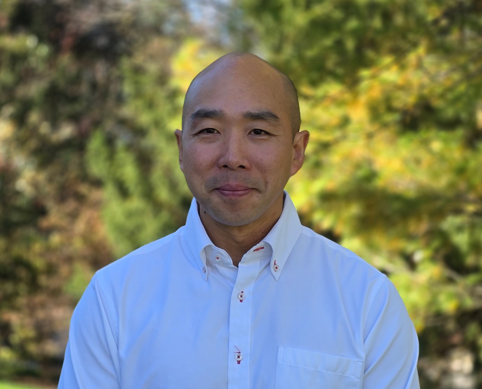
“My journey at Cairn has been truly joyful. Looking back, I did not anticipate the depth of transformation I would undergo. It wasn’t just that the program imparted a comprehensive foundation of knowledge; the expert faculty enriched my experience with their meaningful guidance and compassion. In my heart, I am deeply grateful, inspired, and empowered.”
– Phillip A.
Yes, our Master of Science in Counseling (MSC) program is designed to meet the educational requirements for licensure in Pennsylvania, New Jersey, and Delaware. Because each state establishes its own criteria for professional licensure, including counseling and psychology, requirements may vary. We strongly encourage you to consult the licensing board in the state where you intend to practice to ensure they understand the specific educational and clinical requirements for licensure. Refer to this page for more information.
In summary, only the Master of Science in Counseling (MSC) program meets the educational requirements for licensure.
The Master of Arts in Community Counseling and the Master of Arts in Counseling Ministry are shorter programs that do not fulfill licensure requirements. These MA degrees can typically be completed in two years of full-time study, whereas the MSC is a 60-credit program usually completed in three years of full-time enrollment.
All three programs share a common core curriculum during the first two years, which includes the following foundational courses:
CSG 601: Counseling Theory and Helping Relationships
CSG 602: Helping Relationships Laboratory
CSG 611: Psychopathology, Assessment, Diagnosis, and Treatment in Counseling
CSG 612: Individual Assessment Laboratory
CSG 701: Marriage and Family Counseling
CSG 702: Marriage and Family Counseling Laboratory
CSG 711: Group Counseling: Dynamics, Theory, and Practice
CSG 712: Small Groups Laboratory
The Master of Science in Counseling (MSC) offers broader career and ministry opportunities compared to the MA degrees.
The MSC includes an additional year of coursework, along with a practicum and internship, which fulfills the educational requirements for professional licensure in Pennsylvania. This advanced training opens doors to a wide range of roles in both clinical and ministry settings.
Licensed professional counselors (LPCs) can work in private practice, providing outpatient therapy, or in inpatient psychiatric and substance use treatment facilities. Correctional institutions—including state prisons and county jails—also employ both licensed and unlicensed master’s-level clinicians to deliver mental health services to incarcerated individuals. Additionally, LPCs are often employed in partial hospitalization programs, residential treatment centers, and are frequently tasked with supervising non-licensed staff. Schools are increasingly integrating licensed professional counselors and certified school counselors into their support teams to address student mental health needs.
While licensed professional counselors are qualified to provide marriage and family counseling, those seeking to become Licensed Marriage and Family Therapists (LMFTs) in Pennsylvania must complete a program with a dedicated marriage and family therapy track or pursue a post-graduate certification in that specialization to meet licensure requirements.
One of the key distinctives of our counseling programs is the use of theological principles to conceptualize clinical mental health issues. Students are equipped to conceptualize mental health issues through a Christian theological lens, drawing on biblical principles to inform their understanding of human behavior, suffering, and healing. At the same time, they receive robust training in the clinical language, frameworks, and evidence-based practices necessary to function effectively across a wide range of treatment settings.
A hallmark of the program is its four semesters of counseling laboratory training. These labs provide in-depth, hands-on experience in developing core counseling skills within a highly supportive and realistic environment. Through simulated counseling sessions that closely mirror real-life scenarios, students gain the confidence and competence needed to transition seamlessly into professional or ministerial roles upon graduation. This dual emphasis on theological insight and clinical excellence prepares graduates to serve with both compassion and credibility in diverse contexts.
Yes, the MS in Counseling can be completed 100% online in addition to onsite. This enables you to earn your degree while you work or care for your family from anywhere. Most courses are 7-weeks long and the program shares the same Christ-centered curriculum as onsite. Counseling simulation labs are 15-weeks long and are held weekly via synchronous sessions.
Courses typically contain seven units and are delivered in 7-week terms. Each unit contains 5-7 modular activities. Each learning activity includes instructional videos accompanied by reflections, quizzes, discussion forums and other assessments. Courses also utilize adaptive learning technologies such as Cerego for long-term retention of concepts and video-threads for enhanced collaboration.
The curriculum is tailored to fit your busy schedule, with courses typically lasting 7 weeks and six start dates annually: September, late October, early January, mid-March, early May, and early July.
If you previously earned an MS or MA in Counseling from Cairn University and now need to complete additional courses to become eligible for state licensure, you may want to consider the Graduate Counseling Professional Year Program.
This year of study is designed for individuals who hold a graduate degree in counseling from Cairn but lack sufficient credits (or the specific required courses) for state licensure. Our staff and faculty will work with you to create and individualize a plan of study based on your transcript(s). This allows us to best determine what classes you need to meet state licensing board requirements.
Please contact us for more information.
Interested in our counseling programs with weekly labs? Complete this form to connect with an admissions advisor for personalized guidance on schedules, costs, and application steps. We’re here to help you take the next step!